
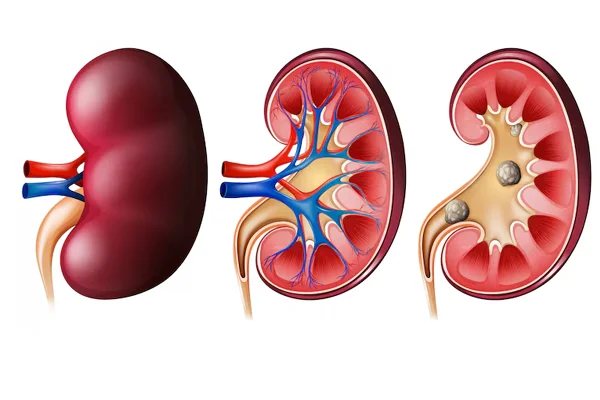
Kidney stones are hard deposits that form when certain minerals and salts in the urine become concentrated and crystallize inside the urinary tract. Their size, location and composition can vary, and treatment depends on factors such as the stone's characteristics, symptoms and the patient's overall health.
Dr. Udit Gupta provides personalized Kidney Stone Management in Vasant Kunj, focusing on accurate evaluation, appropriate treatment and strategies to reduce the risk of recurrent stones.
Kidney stones can develop when urine contains high concentrations of certain stone-forming substances. Low fluid intake, dietary factors, certain medical conditions, family history and some medications can increase the risk.
Different types of kidney stones can form, including calcium, uric acid, struvite and cystine stones. Identifying the likely cause can be useful when planning long-term prevention.
Small stones may sometimes pass without causing noticeable symptoms. Larger stones or stones that obstruct urine flow may cause:
Fever or chills along with suspected urinary obstruction can indicate a potentially serious infection and requires prompt medical evaluation.
An important part of Kidney Stone Management is determining the stone's size, location and potential impact on the urinary system.
Depending on the situation, evaluation may include:
The choice of investigation depends on the patient's symptoms and clinical condition.
Not every kidney stone requires the same treatment. Some smaller stones may pass naturally with appropriate medical guidance, while larger, obstructing or complicated stones may require intervention.
Kidney Stone Management in Vasant Kunj may involve hydration guidance, pain management, medicines that may assist stone passage in selected cases, treatment of associated urinary problems and referral for urological intervention when required.
Treatment decisions are based on the size and location of the stone, symptoms, kidney function, presence of infection and other individual factors.
People who have experienced kidney stones may have a higher risk of developing them again. Prevention therefore forms an important part of long-term Kidney Stone Management.
Depending on the type and cause of the stone, preventive recommendations may include:
A personalized prevention strategy is generally more useful than making broad dietary changes without knowing the likely cause of stone formation.
Most kidney stones do not permanently damage the kidneys when appropriately managed. However, persistent obstruction, recurrent infections or repeated stone-related complications can affect kidney health.
Patients with recurrent stones, reduced kidney function, a solitary kidney or urinary obstruction may require closer nephrology or urology evaluation.
Prompt medical assessment is important when kidney stone symptoms are accompanied by:
These symptoms can sometimes indicate complications requiring urgent treatment.
For patients seeking Kidney Stone Management in Vasant Kunj, Dr. Udit Gupta provides comprehensive nephrology evaluation focused on identifying contributing factors, managing kidney health and reducing the risk of recurrence.
His approach combines clinical assessment, appropriate investigations, personalized treatment recommendations and preventive kidney care to support better long-term outcomes.
Common symptoms include sharp pain in the back or side, pain radiating toward the abdomen or groin, blood in the urine, painful urination, nausea and increased urinary frequency.
Some smaller stones may pass naturally, depending on their size and location. Larger or obstructing stones may require additional treatment or intervention.
Diagnosis may involve urine and blood tests along with imaging such as ultrasound or other appropriate investigations. The evaluation depends on the patient's symptoms and clinical condition.
Yes. Some people develop recurrent stones. Identifying the possible cause and following an individualized prevention plan can help reduce the risk of recurrence.
Adequate fluid intake is generally important, while dietary recommendations depend on the type of stone and individual risk factors. Your doctor may recommend specific dietary or medical measures after evaluation.
Consult a doctor for persistent or severe pain, blood in the urine, recurrent stones or suspected obstruction. Fever, chills, vomiting or difficulty passing urine with suspected stones requires prompt medical evaluation.


